 Welkom in Amerika
WHITE MOUNTAIN NATIONAL FOREST
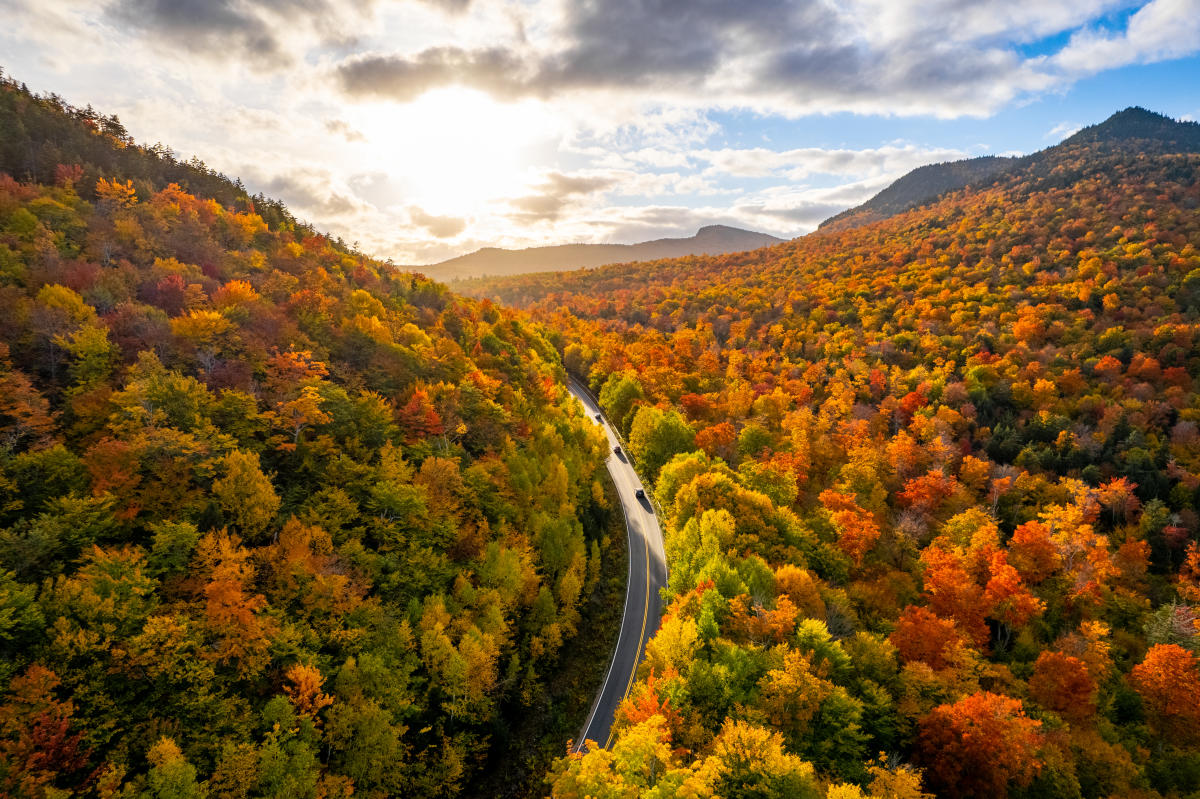
De White Mountains zijn een bergketen in het noorden van de Amerikaanse staat New Hampshire, met een klein deel dat zich uitstrekt in Maine is het een mekka voor natuurliefhebbers. Ze maken deel uit van de grotere Appalachian Mountains en staan bekend om hun ruige schoonheid, diepe bossen en spectaculaire uitzichten. Dit door de US Forest Service beheerde bosgebied in het noorden van New Hampshire beslaat een oppervlakte van 295.000 ha, met bergen, rivieren, kristalheldere meren en uitgestrekte bossen. Het White Mountain National Forest, waarvan een klein deel in de naburige staat Maine ligt, is 15.000 ha groot. Er zijn meer dan 20 bergen hoger dan 1200 m.
Je vindt hier zo'n 1.900 km (1.200 mijl) aan wandelpaden, tientallen meren, vennetjes en rivieren en 23 kampeerterreinen. In het National Forest, het mooiste natuurgebied van de staat, leven wilde dieren in overvloed, waaronder een grote populatie elanden. Deze reusachtige leden van de hertenfamilie zijn erg schuw, maar bij zonsop-en zonsondergang zijn ze vanaf de weg te zien als ze rondlopen op zoek naar eten of in een moerassig vennetje staan. Als je door de White Mountains rijdt, heb je het ene fraaie uitzicht na het andere: valleien vol dennenbomen, watervallen over rotsige bodems en forelrivieren. In 1998 werd het 160 km lange White Mountains Trail aangewezen als National Scenic and Cultural Byway. Deze route loopt door Mount Washington Valley, Crawford Notch, North Conway en Franconia Notch.
In de herfst veranderen de schitterende herfstbladeren, afgewisseld met altijd groene bomen, het ruige landschap in een levend schilderspalet. De bladeren hebben dan verschillende kleuren het vlammend rood van de esdoorn, het goud van de berk en het kanstanjebruin van de Amerikaanse eik. Het is mooi om hier in de herfst te rijden, hoewel het erg druk kan zijn omdat er duizenden loofkijkers op de weg zijn.
Ook kun je hier skiën. Skiën kun je in principe van november tot april onder meer bij Cannon Mountain, Tuckerman Ravine, Loon Mountain, Waterville Valley, Bretton Woods en Wildcat Mountain.
Vanwege de grootste populatie elanden (moose) in New Hampshire en dit gebied een van de drukstbezochte National Forests in de Verenigde Staten is, mag er niet langs de autowegen worden gekampeerd. Kamperen is toegestaan op de daartoe bestemde terreinen. Het White Mountain National Forest, ook wel kortweg de White Mountains genoemd, is gemakkelijk bereikbaar via Interstate Highway 93.
Trekpleisters in de White Mountains zijn Mount Washington, het gebied langs de Kancamagus Highway, het Franconia Notch State Park en het Crawford Notch State Park.

Bezienswaardigheden / tips White Mountains 2025:
1) Franconia Notch State Park: Franconia Notch State Park ligt in het hart van de White Mountains. Het park strekt zich uit door een spectaculaire bergpas – de Franconia Notch – tussen Cannon Mountain en Mount Lafayette. Het is beroemd om zijn indrukwekkende natuur, watervallen, wandelroutes en rijke geschiedenis. Met als hoogtepunt de The Flume Gorge, een indrukwekkende kloof van zo’n 240 meter lang aan de voet van Mount Liberty. Via houten wandelpaden loop je langs watervallen, granieten muren en een charmante overdekte brug (voor meer informatie bezoek mijn website).
2) Crawford Notch State Park: Crawford Notch State Park ligt langs Route 302, tussen de dorpen Bartlett en Carroll (Twin Mountain). Het park bevindt zich in het zuidelijke deel van de Presidential Range, een bergketen binnen de White Mountains. Het park beslaat meer dan 2.600 hectare (6424 acre) en strekt zich uit door een diepe gletsjervallei, omringd door steile bergwanden, bossen, rivieren en watervallen. Het is een paradijs voor wandelaars, natuurliefhebbers en fotografen — vooral in de herfst, wanneer de herfstkleuren spectaculair zijn. Eén van de hoogtepunten zijn de Mount Willard Trail (Een van de populairste wandelingen van het park) en de Arethusa Falls (De hoogste waterval van de staat (ongeveer 43 meter, voor meer informatie bezoek mijn website).
3) Kancamagus Highway (Route 112): De Kancamagus Highway is een schilderachtige bergweg van ongeveer 55 kilometer (34 mijl) die Lincoln en Conway met elkaar verbindt, dwars door het White Mountain National Forest. De weg volgt deels de loop van de Swift River en slingert zich door dichte bossen, bergpassen en valleien — zonder dorpen, tankstations of winkels onderweg. Er is geen tol, maar er geldt een kleine Forest Service Day Pass (± $5) voor parkeren bij wandelpaden en uitzichtpunten. Tussen half september en half oktober (fall foliage) is deze route op zijn mooist (voor meer informatie bezoek mijn website).
4) Mount Washington: Mount Washington is het hoogste gebergte van New England, en een absolute blikvanger in de White Mountains. Mount Washington is 1.917 meter (6.288 feet) hoog en ligt in de Presidential Range van de White Mountains binnen het Mount Washington State Park. Het is bekend om zijn extreme weer en spectaculaire uitzichten. De Mount Washington Observatory aan de top doet al decennialang weeronderzoek en is ook te bezoeken. Je kunt hier met de auto naar de top rijden of je kunt gebruik maken van de Mount Washington Cog Railway. Dit is een historische tandradbaan (sinds 1869) aan de westkant van de berg die je naar de top van Mount Washington brengt (alleen als het weer goed is rijdt de locomotief, wij zijn nu hier 3x geweest en helaas is het ons steeds niet gelukt om deze rit te maken vanwege het slechte weer).
5) North Conway: North Conway ligt in het hart van de White Mountains. Het is eigenlijk één van de toegangspoorten tot het White Mountain National Forest en een populaire uitvalsbasis voor reizigers die de omgeving willen verkennen. Het is ideaal omdat er voldoende aanbod is van hotels, motels, winkels en restaurants maar ook rond North Conway zijn er voldoende bezienswaardigheden. Echo Lake State Park is een prachtige plek voor zwemmen, kanoën, paddleboarden en ontspannen aan het water. Vanaf hier heb je een prachtig uitzicht op Cathedral Ledge die je ook kunt bezoeken. Een trein rit met de Conway Scenic Railroad is ook een optie (voor meer informatie bezoek mijn website).
6) Littleton: Littleton ligt aan de rand van de White Mountains en is erg leuk om te bezoeken. Wandel door de charmante Main Street van Littleton, het heeft leuke boetieks, cafés en historische gebouwen. Spot het beeld van Pollyanna in Littleton, symbolisch voor de stad. Wandel of fiets op de trails rondom Littleton, zoals Kilburn Crags: kort, toegankelijk en mooi uitzicht (voor meer informatie bezoek mijn website).
7) Autumn Foliage (herfstkleuren): De White Mountains‑regio kent een rijke mix van loofbomen zoals suiker‑esdoorn (sugar maple), rode esdoorn (red maple), berken (white & yellow birch), Amerikaanse beuk (American beech) en tamarack. Deze variatie zorgt voor een brede kleurwaaier in de herfst. Het bladvervalproces wordt beïnvloed door de ligging (hoogte‑verschillen), de koelte van de nachten en de hoeveelheid zonopbrengst. Hierdoor verspreidt de kleurverandering zich over de regio in fasen. De herfstkleuren worden wereldwijd fall foliage geroemd. Over het algemeen begint de kleurenverandering rond midden en eind september in de hoger gelegen gebieden. Het hoogtepunt (peak foliage) ligt meestal in de White Mountains rond begin tot midden oktober.
8) Foliage tracker: Check vooraf de actuele foliage-tracker of rapporten, zo weet je of je op het juiste moment komt.
.jpg)
The White Mountains are a mountain range in the northern part of the US state of New Hampshire, with a small section extending into Maine, it is a mecca for nature lovers. They are part of the larger Appalachian Mountains and are known for their rugged beauty, deep forests, and spectacular views. This 720,000-acre (295,000 ha) US Forest Service-managed forest in northern New Hampshire features mountains, rivers, crystal-clear lakes, and vast forests. The White Mountain National Forest, a small portion of which lies in neighboring Maine, covers 37,000 acres (15.000 ha) and has more than 20 mountains above 4,000 feet (1,200 m).
Here you'll find some 1,200 miles (1,900 km) of hiking trails, dozens of lakes, ponds and rivers, and 23 campgrounds. The National Forest, the state's most beautiful natural area, is home to an abundance of wildlife, including a large population of moose. These giant members of the deer family are very shy, but at sunrise and sunset, they can be seen from the road as they search for food or stand in a marshy pond. Driving through the White Mountains, you'll encounter one stunning view after another: pine-studded valleys, waterfalls cascading over rocky bottoms, and trout rivers. In 1998, the 100-mile (160 km) White Mountains Trail was designated a National Scenic and Cultural Byway. This route passes through Mount Washington Valley, Crawford Notch, North Conway, and Franconia Notch.
In autumn, the beautiful fall leaves, interspersed with evergreen trees, transform the rugged landscape into a living painter's palette. The leaves then have different colours: the flaming red of the maple, the gold of the birch and the chestnut brown of the American oak. It's beautiful to drive here in the fall, although it can get very busy with thousands of leaf-watchers enthusiasts on the road.
You can also ski here. Skiing is possible from November to April at Cannon Mountain, Tuckerman Ravine, Loon Mountain, Waterville Valley, Bretton Woods and Wildcat Mountain, among others.
Because New Hampshire has the largest moose population and this area is one of the most visited National Forests in the United States, camping is prohibited along highways. Camping is permitted in designated areas. The White Mountain National Forest, also known as the White Mountains, is easily accessible via Interstate Highway 93.
Attractions in the White Mountains include Mount Washington, the area along the Kancamagus Highway, Franconia Notch State Park, and Crawford Notch State Park.
Highlights / tips White Mountains 2025:
1) Franconia Notch State Park: Franconia Notch State Park is located in the heart of the White Mountains. The park stretches through a spectacular mountain pass—Franconia Notch—between Cannon Mountain and Mount Lafayette. It is famous for its stunning scenery, waterfalls, hiking trails, and rich history. The highlight is The Flume Gorge, a dramatic 800-foot-long gorge at the foot of Mount Liberty. Boardwalks lead past waterfalls, granite walls, and a charming covered bridge (for more information, visit my website).
2) Crawford Notch State Park: Crawford Notch State Park is located along Route 302, between the towns of Bartlett and Carroll (Twin Mountain). The park is located in the southern part of the Presidential Range, a mountain range within the White Mountains. The park covers over 2,600 hectares (6,424 acres) and stretches through a deep glacial valley, surrounded by steep mountain walls, forests, rivers and waterfalls. It’s a paradise for hikers, nature lovers, and photographers—especially in the fall, when the autumn colors are spectacular. Highlights include the Mount Willard Trail (one of the park's most popular hikes) and Arethusa Falls (the state's highest waterfall (approximately 143 feet, for more information visit my website).
3) Kancamagus Highway (Route 112): The Kancamagus Highway is a scenic 34-mile (55 km) mountain road connecting Lincoln and Conway, cutting through the White Mountain National Forest. Part of the highway follows the Swift River, winding through dense forests, mountain passes, and valleys—with no towns, gas stations, or stores along the way. There are no tolls, but a small Forest Service Day Pass (approximately $5) is required for parking at trails and overlooks. This route is at its best between mid-September and mid-October (fall foliage) (for more information visit my website).
4) Mount Washington: Mount Washington is the highest mountain in New England, and an absolute eye-catcher in the White Mountains. Mount Washington is 6,288 feet (1,917 meters) high and is located in the Presidential Range of the White Mountains within Mount Washington State Park. It is known for its extreme weather and spectacular views. The Mount Washington Observatory at the top has been conducting weather research for decades and is also open to the public. You can drive to the top or use the Mount Washington Cog Railway. This is a historic cog railway (since 1869) on the west side of the mountain that takes you to the top of Mount Washington (the locomotive only runs when the weather is good; we have been there three times now and unfortunately we were unable to make this trip due to bad weather).
5) North Conway: North Conway is located in the heart of the White Mountains. It is actually one of the gateways to the White Mountain National Forest and a popular base for travelers who want to explore the surrounding area. It is ideal because there are plenty of hotels, motels, shops and restaurants, but there are also plenty of attractions in the area around North Conway. Echo Lake State Park is a beautiful spot for swimming, canoeing, paddleboarding and relaxing by the water. From there you have a beautiful view of Cathedral Ledge, which you can also visit. A train ride on the Conway Scenic Railroad is also an option (for more information visit my website).
6) Littleton: Littleton is located on the edge of the White Mountains and is a great place to visit. Stroll along Littleton's charming Main Street, lined with boutiques, cafes, and historic buildings. Spot the Pollyanna statue in Littleton, a symbol of the town. Hike or bike the trails surrounding Littleton, such as Kilburn Crags, which are short, easy, and offer beautiful views (visit my website for more information).
7) Autumn Foliage: The White Mountains region features a rich mix of deciduous trees such as sugar maple, red maple, white and yellow birch, American beech, and tamarack. This variety creates a wide range of colors in the fall. The leaf drop process is influenced by elevation, the coolness of the nights, and the amount of sunlight. As a result, the color change occurs in stages across the region. The fall colors are prized worldwide as fall foliage. Generally, the color change begins around mid to late September at the higher elevations. Peak foliage usually occurs in the White Mountains around early to mid October.
8) Foliage tracker: Check the current foliage tracker or reports in advance, so you know whether you come at the right time.
.jpg)
@MK
